
Compton Wood Flooring provides subfloor repair in Compton, CA, serving surrounding cities including East Rancho Dominguez, Willowbrook, West Rancho Dominguez, Lynwood and Watts, and brings more than 20 years of wood floor experience to the layer underneath the floor you see. Most Compton houses sit on a raised foundation with a crawlspace, joists and a board or plywood subfloor, and after many decades that structure has usually been through leaks, termites and at least one bad patch. When a floor is soft, sloping or bouncy, the problem is almost always down there.
We do not price a new finish floor until we know what it will be sitting on. That means getting into the crawlspace where we can, measuring slope across the room, probing the subfloor and joists around any damaged area, and looking for the leak or pest that caused it. A beautiful new floor laid over a rotted subfloor fails in the same place the old one did.
Subfloor repair is structural work, and some of it needs a permit. We tell you which parts of the scope fall under the Compton Building and Safety Division before work begins, so there are no surprises when the house is sold or inspected.
Soft Spots and Rotted Subfloor
Soft Spots Near Bathrooms and Kitchens
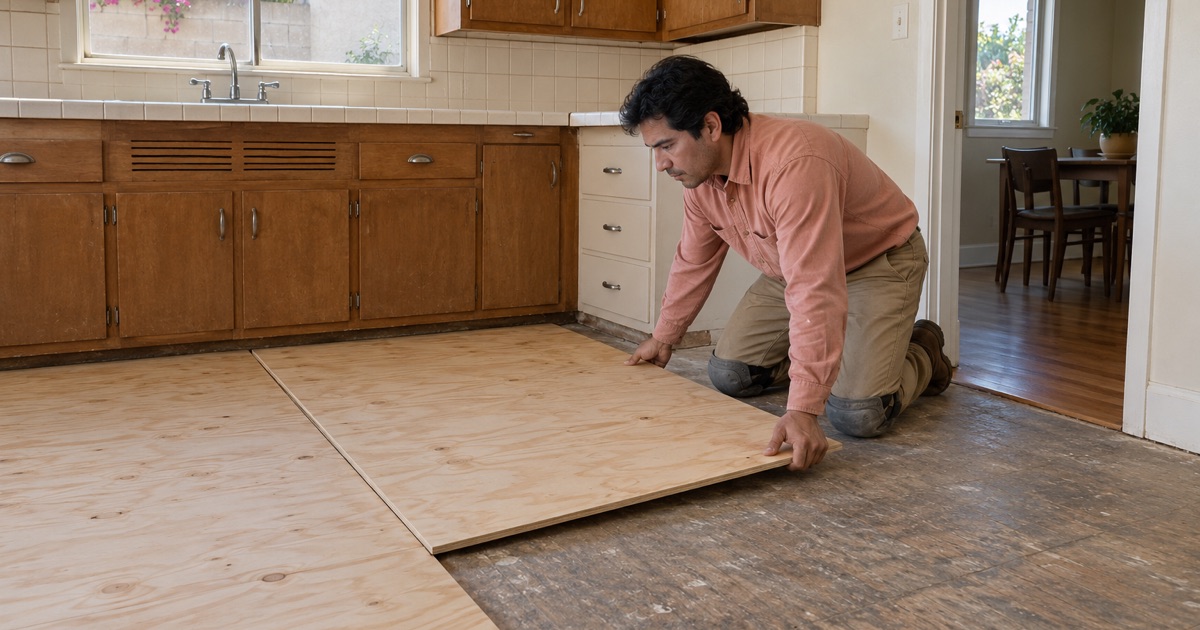
A soft spot next to a toilet, tub, sink or dishwasher usually means water has been getting into the subfloor for months or years. The wood swells, delaminates and eventually loses its ability to hold fasteners. We open the floor, cut back to solid material and replace the damaged section with new plywood glued and screwed to the joists.
Before anything is closed up, we make sure the leak itself is fixed, whether that means a wax ring, a supply line or a shower pan. Replacing subfloor over an active leak only starts the clock again.
Rot Around Old Water Heaters and Laundry Areas
Water heaters that once stood inside the house, often in a hallway closet, commonly leaked for years before being moved or replaced. The subfloor around them is frequently soft or already patched. We cut out the damage, check the joists underneath, and rebuild the area so the finish floor can be woven across it.
Laundry areas show the same pattern from overflowing washers and slow drain leaks. Where an old patch was simply laid over rotted wood, we remove it, because a layer of plywood on top of a soft layer still moves.
Replacing Board Subfloor With Plywood
Many older homes have a board subfloor made of individual planks. When a section is damaged, we either replace the boards in kind or cut back to the joist lines and install a plywood subfloor section of matching thickness. The transition is blocked and fastened so there is no ridge in the finish floor above it.
Sloping, Bouncy and Sagging Floors
Measuring the Slope
Some slope in an older house is normal and not worth chasing. We measure with a level and a laser across each room to find out how much the floor drops and where. That tells us whether the slope is spread evenly, which points to settling, or concentrated in one spot, which points to a failed pier, post or joist.
Those measurements go into your written estimate. If the slope is cosmetic, we can shim or feather the subfloor to make a new finish floor sit flatter; if it is structural, we explain the repair before recommending any flooring.
Sagging Joists and Joist Sistering
A sagging joist makes the floor above it dip or bounce. It may be undersized, notched by an old plumbing run, weakened by termites or simply deflected after decades of load. Joist sistering fastens a new full-length member alongside the old one, restoring stiffness without tearing out the original framing.
Where a joist is badly damaged or split, we add blocking and new support posts under the midspan. The goal is a floor that feels solid underfoot and keeps the new finish floor from cracking along the old dip.
Cripple Walls, Piers and Girders
In a raised-foundation house, the floor framing sits on girders, posts and piers, and around the edges on a short cripple wall. A settled pier or a rotted cripple wall plate lets part of the floor drop. We identify which support has moved and shim, replace or add posts where that is within flooring scope.
When the problem is foundation settlement beyond that, we say so plainly and recommend a foundation contractor, then return to repair the floor once the structure is corrected. A flooring contractor who tries to level a floor over a moving foundation is only buying time.
Damage From Water, Termites and Old Patches
Subfloor Damage From Termites
Subterranean termites often reach the floor through the sill plate and joists before they show up in the finish boards. Drywood termites can hollow out subfloor boards from inside. After a licensed pest company has treated, we remove damaged subfloor and framing, replace it with sound material and bring the finish floor back over it.
The order matters here. Compton’s Home Repair Grant can fund termite treatment for eligible low-income owners, but flooring is not among the items it names, so the structural and floor repair that follows is usually a separate cost. We scope it on its own line so you can plan for it alongside the treatment.
Old Floor Furnace Openings
When an old floor furnace is removed, it leaves a rectangular opening in the subfloor between the joists. Too often that hole was covered with a loose sheet of plywood that sags and bounces. We frame the opening properly with blocking, sheath it flush with the surrounding subfloor and make sure the new section is fastened solidly on every edge.
The old gas line and vent to the furnace should already be capped by a licensed trade before we close the floor. Once the framing is in, the finish floor is woven across the patch so no square outline is left in the hallway, which is the first place a buyer or inspector looks.
Plywood Underlayment Over Old Subfloor
Even a sound board subfloor can be too uneven or too gapped for new flooring. Adding a layer of plywood underlayment, glued and screwed across the old boards, creates a flat, stiff base and reduces squeaks. We check the added height at doorways and transitions so the finished floor still meets thresholds cleanly.
Working With Insurance and Inspections
Documenting Water Damage for a Claim
If the damage came from a sudden leak, your homeowners policy may cover part of the repair. We photograph the damage, take moisture readings across the affected subfloor and framing, note where the water came from and write a scope an adjuster can use. Clear records make a claim easier to review.
We also note where a repair would leave new flooring beside old, since California’s fair claims regulations under 10 CCR 2695.9 address replacement that leaves a reasonably uniform appearance. Whether that applies to your claim is the adjuster’s decision, but the documentation gives them what they need to make it.
Presale and Rental Inspections
Soft floors and trip hazards can show up on Compton’s presale inspection and on rental inspections under HUD’s NSPIRE standard for voucher units. We repair the underlying subfloor, not just the surface, and provide a written description of the work for the seller, landlord or inspector.
- 20+ Years of Wood Flooring
- Written Scopes and Estimates
- Free Estimates